News I iCET Successfully Hosts International Symposium on "Promoting the Large-Scale Development of SAF"
The symposium was moderated by Dr. Feng An, iCET Honorary Director. In his opening remarks, he noted that SAF development is now at a critical juncture, transitioning from "technologically feasible" to "large-scale application." As a primary application of green fuels, SAF has evolved from a simple emissions reduction target to a strategic choice that also supports energy security and industrial resilience. At the same time, the industry bottleneck is not a single issue but a structural challenge involving multiple factors such as diverse technology pathways, varying sustainability certification systems, and the pressure of the green premium. Certification systems are profoundly influencing technology choices, investment decisions, and market access, while the cost premium needs to be bridged through carbon markets, subsidies, and policy mixes. He emphasized that coordinating technology routes, certification systems, and market mechanisms is a key prerequisite for scaling up SAF.
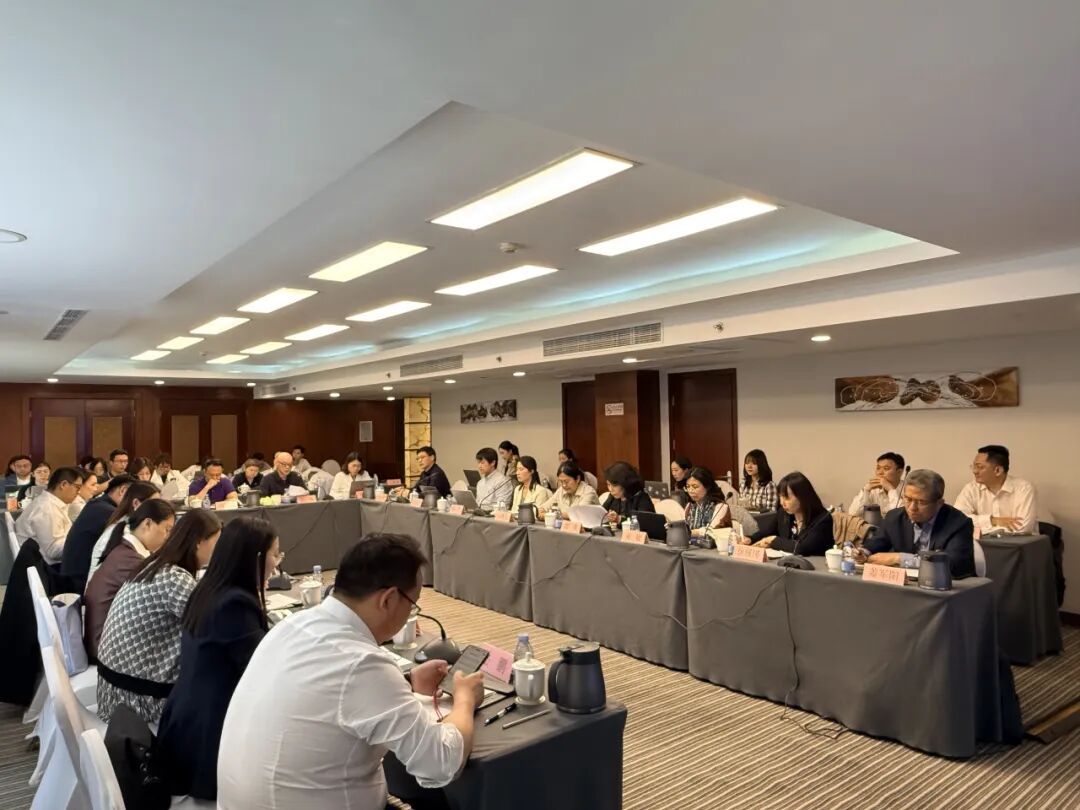
Figure: Event Scene
Session 1: Focus on Certification Challenges – The "Same Race Track" for Different Technology Routes
Lanzhi Qin, Senior Researcher at iCET, first systematically reviewed the main differences and evolving trends in global SAF sustainability certification frameworks. She noted that global SAF certification systems are characterized by "converging methods but highly divergent regulations," and that future coordination depends on further harmonization of accounting rules, ILUC determinations, and mutual recognition mechanisms.
Regarding specific technology pathways, several industry experts shared their insights:
Yifang Lou (HEFA pathway, Henan Junheng Industrial Group): Noted that HEFA, as the current main pathway for large-scale SAF application, plays an important transitional role in aviation decarbonization. However, its long-term expansion is limited by sustainable feedstock supply constraints, fragmented certification systems, and strong policy dependence. While supporting near-term commercialization and scale-up of HEFA, policy and capital should also be directed towards next-generation SAF routes like PtL.
Shen Wang (ATJ pathway, Yalu Hangyou Co., Ltd.): Pointed out that the ATJ pathway, using ethanol as a core feedstock, offers scalability and cost advantages. Certification is shifting from feedstock debates to a carbon-intensity-focused approach, potentially making ATJ a key transition pathway for moving SAF from demonstration to scale by leveraging global surplus bio-ethanol resources.
Zeshi Wang (FT pathway, China Power Engineering Consulting Group): Suggested that the FT pathway has multi-feedstock and high emissions-reduction potential, but faces more complex challenges in carbon accounting boundaries, certification standard consistency, and cost control due to long industrial chains, high energy consumption, and fluctuations in green power/hydrogen. China urgently needs to improve its domestic certification system and align it with international rules.
Lanting Wu (PtL pathway, Envision Energy): Noted that for PtL, a key direction for deep decarbonization, the core challenge under existing certification frameworks is not the technology itself, but the complexity of traceability and accounting rules for green power, hydrogen, and carbon sources, as well as mismatches between international standards and China's system, leading to significant uncertainty in certification and market acceptance.
Session 2: Bridging the Green Premium – From Policy Tools to Market Mechanisms
Lin Zou (Civil Aviation Flight University of China): Starting from China's "dual carbon" strategy, noted that SAF development is constrained by policy support, industrial foundation, and market signals, with China facing systemic challenges in scaling up due to costs, feedstocks, technology, and mechanisms.
Yu Chen (SAF Center, China Academy of Civil Aviation Science and Technology): Identified the core bottleneck to SAF promotion as the lack of an effective mechanism to share the green premium. The rapidly growing demand for corporate ESG and Scope 3 emissions reductions provides a breakthrough for voluntary SAF market applications and realizing environmental value. The "Spark Project," utilizing the AnchorTrace platform, was introduced to create a complete closed loop for SAF environmental attribute registration, trading, transfer, and retirement.
Camille Mutrelle (Transport & Environment, T&E): Shared insights on the role of the EU ETS and RefuelEU policy in narrowing the SAF cost gap. Noted that due to the persistent significant green premium, relying solely on mandates is insufficient; carbon markets, fiscal support, and market-based mechanisms are needed to lower costs and investment risks.
Qiyu Liu (Rocky Mountain Institute): Noted that the U.S. has formed a comprehensive SAF policy ecosystem including tax credits, RFS/LCFS market mechanisms, long-term production capacity targets, a Book & Claim system, and voluntary market support. Multi-level subsidies and market mechanisms drive industry expansion, but policy adjustments are reshaping feedstock trade and e-SAF development pathways.
Jin Li (Shanghai Environment and Energy Exchange): Introduced recent developments in China's national and local carbon markets, sharing practical experience of the civil aviation industry's participation in local carbon markets and related carbon finance explorations.
Roundtable Discussion: Collaborative Efforts Toward Scale-Up
The roundtable discussion featured more than ten experts, including Yuting An (China Quality Certification Centre), Shen Guo (Sinopec Research Institute of Petroleum Processing), Quanxing Jia (China Academy of Civil Aviation Science and Technology), Jinjin Xu (Boeing China), Min An (Beijing Zhongtan Zhonghe Certification), Junyang Jiang (Global Green Fuel Centre), Meiqi Yue (Beijing Shougang Langze Technology), Shutong Liu (MotionEco), Hanyang Wei (Cathay Pacific Group), Jieqiong Ren (Airbus China), Peng Yue (Beijing Green Exchange), Guangxing Wang (COFCO Biotechnology), and Le Yin (Energy Foundation).
The discussion focused on two core themes:
International sustainability certification systems are profoundly influencing the development paths and market prospects of different SAF technology routes. Certification rules and standards, varying globally, are key factors affecting technology commercialization and market access.
China needs to coordinate the development of its certification system and price support mechanisms. Experts agreed China should accelerate establishment of a SAF certification system that meets international mutual recognition requirements while reflecting domestic industrial and resource conditions, combined with policies like tiered standards, carbon markets, subsidies, and Book & Claim to reduce the green premium and stimulate market demand.
The symposium concluded successfully with lively discussion and consensus. Attendees agreed that no single tool can support SAF industrial development; effective coordination among technology routes, sustainability certification, and pricing mechanisms is essential, along with cultivating globally influential market demand and a consumption system, to ultimately drive SAF from "pilot demonstration" to "large-scale development and application."
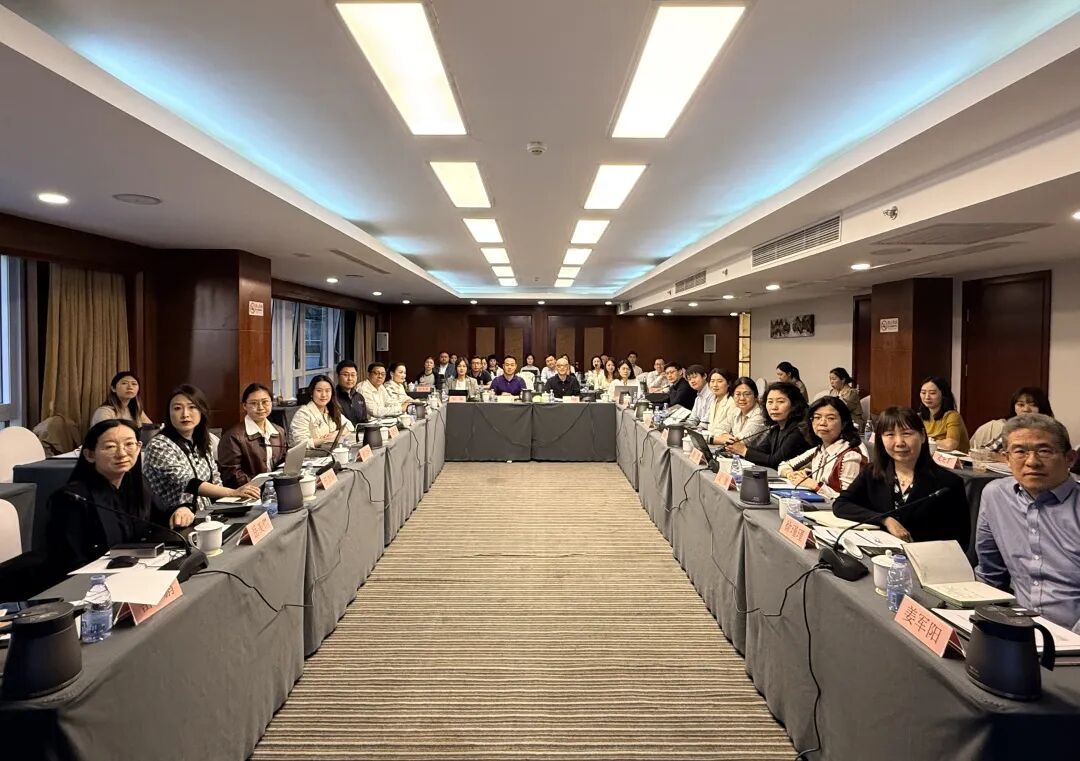
Figure: Group Photo of Guests
Conclusion
This symposium was the third thematic event of iCET's "International Green Aviation Dialogue" mechanism, systematically exploring key constraints and breakthrough pathways for SAF scale-up from technology, policy, and market perspectives. iCET will continue to leverage this platform, focusing on green aviation fuels, aviation carbon markets, low-carbon technology innovation, and international rule alignment, to build cross-sectoral, international exchange and cooperation platforms, develop forward-looking and actionable policy recommendations and industry consensus, and contribute to China's green aviation transition and global aviation emissions reduction cooperation.
 Summary Highlights—International Workshop on Promoting SAF Scale-up.pdf