News I iCET Successfully Hosts the 2024 U.S.–China Cleantech Cooperation Forum in Beijing
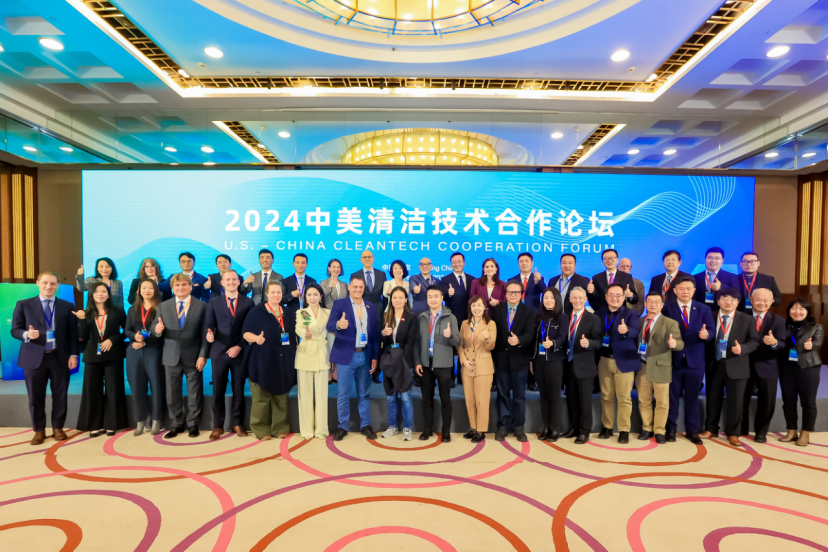
Group Photo of Guests at the 2024 Beijing U.S.–China Cleantech Cooperation Forum
Beijing, November 4, 2024 — The 2024 U.S.–China Cleantech Cooperation Forum successfully concluded at the International Hall of the Beijing International Hotel. The forum was co-hosted by the Trade Development Bureau of the China Council for the Promotion of International Trade (CCPIT), the International Trade Administration of the U.S. Department of Commerce, and the Commercial Service of the U.S. Embassy in China. It was organized by the Innovation Center for Energy and Transportation (iCET) and other institutions, with strong support from the Energy Foundation.
Opening Remarks
The forum commenced punctually at 9:00 a.m., moderated by Li Xiang, Deputy Director-General of the CCPIT Trade Development Bureau. Opening remarks were delivered by Li Qingshuang, Vice Chairman of CCPIT, and Everett Wakai, Minister Counselor for Commercial Affairs at the U.S. Embassy in China, on behalf of the organizers.
They emphasized that the gathering of Chinese and U.S. enterprises to explore cooperation reflects the harmonious and complementary nature of bilateral economic relations. Climate cooperation, they noted, is a critical component of U.S.–China relations. As the world’s largest developing country and the largest developed country, China and the United States possess strong complementarities in areas such as energy transition and the circular economy, with vast potential for collaboration.
Subsequent remarks were delivered by Qiu Yong, Deputy Director-General of the Department of American and Oceanian Affairs, Ministry of Commerce of China; Li Xiang, Director of the Department of International Cooperation at the National Energy Administration; and Zou Ji, CEO and China President of the Energy Foundation (via video message). All stressed the importance of clean energy technologies in promoting global sustainable development and expressed optimism and confidence in deepening bilateral cooperation in the cleantech sector.
Energy Transition Sub-Forum

Moderated by Dr. An Feng, the Energy Transition Sub-Forum featured leading experts including Kaitlin Oujo, U.S. Department of Energy Representative in China; Yu Zhenhua, Secretary-General of the Energy Storage Committee of the China Energy Research Society; Ma Jun, General Manager of Gas Power Generation Equipment at GE Vernova; Liu Lianyu, President of the Energy Service Business Line at Mingyang Smart Energy Group; and Xu Jinjin, Head of Sustainable Business & Partnerships at Boeing China.
The roundtable-style discussion explored the latest global trends in the energy transition, technological innovation, and market opportunities. The dialogue provided valuable insights for enhancing Sino-U.S. collaboration in the energy sector.
Green Finance & Climate Investment Sub-Forum
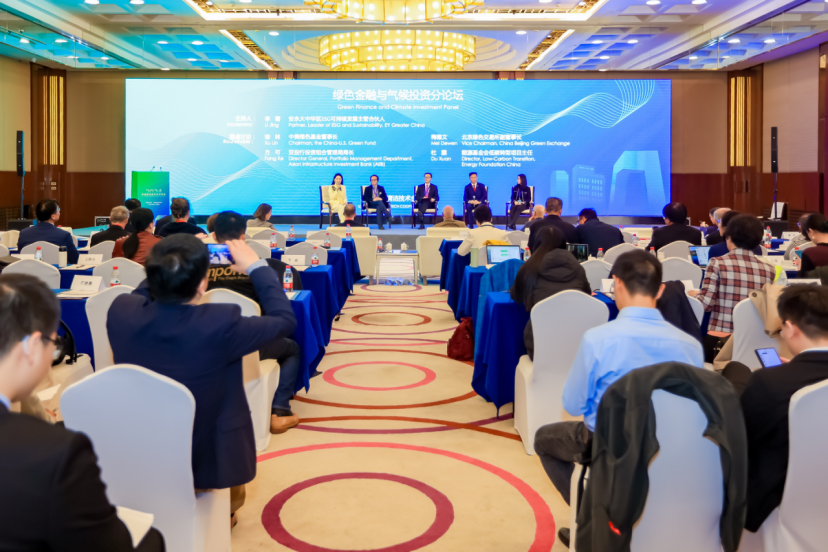
Moderated by Li Jing, ESG Sustainable Development Lead Partner at Ernst & Young Greater China, the Green Finance Sub-Forum featured keynote speeches from Xu Lin, Chairman of the China-U.S. Green Fund; Mei Dewen, Vice Chairman of the China Beijing Green Exchange; Fang Ke, Director of Portfolio Management at the Asian Infrastructure Investment Bank; and Du Xuan, Program Director for Low-Carbon Transition at the Energy Foundation.The speakers examined how green finance can drive climate-related investment and accelerate the commercialization of clean technologies.
Showcase of Leading U.S. Cleantech Solutions
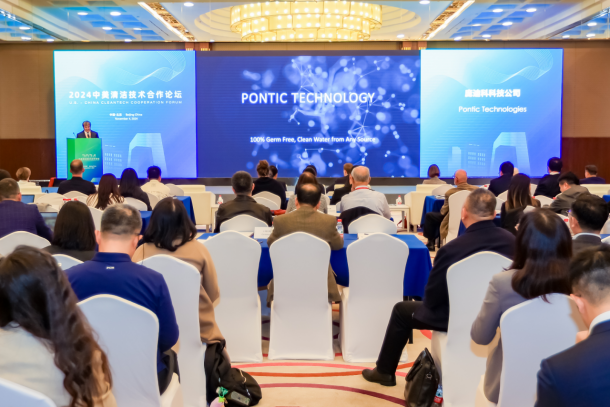
In the afternoon session, the forum featured a dedicated showcase of leading U.S. cleantech companies. Fourteen innovators—including Thermo Fisher , Dais Corporation, Cambustion, PolyGone, KAMAT, Nimbus, Orenco Systems, Advanced Building Performance, E-twow, Seminent, Egret, BDP Envirotech, Calux/California Sun, and Pontic Technology—presented their latest breakthroughs in fields such as environmental monitoring, nanomaterials, energy-environment sensing systems, microplastic filtration, carbon capture, optoelectronics, wastewater treatment, smart buildings, smart transportation, microgrids, and solar materials.
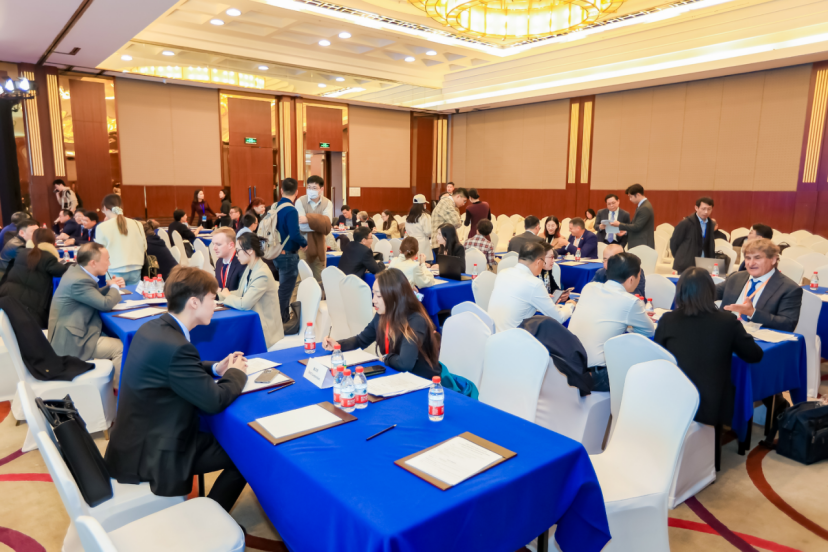
Following the presentations, a one-on-one business matchmaking session was held between U.S. and Chinese enterprises. Participants engaged in in-depth discussions in a friendly and professional setting, exploring collaboration opportunities and sharing market insights. This session laid a solid foundation for future bilateral cooperation in the cleantech sector.
Conclusion
The 2024 U.S.–China Cleantech Cooperation Forum stands as a specialized platform for bilateral exchange in new energy and environmental industries. It aims to deepen and optimize pragmatic cooperation between China and the United States across multiple dimensions of cleantech, accelerate the application and commercialization of high-quality technologies, and promote mutually beneficial outcomes for both sides.
The successful forum not only showcased significant progress in the cleantech collaboration between the two countries but also injected fresh momentum into advancing global energy transition and achieving sustainable development goals. Looking ahead, both sides will continue to strengthen cooperation, jointly address the challenges of climate change, and unlock further opportunities for cleantech innovation.